

Fit is the first decision in a jeans range, and it shapes everything that follows: fabric, wash, pockets and even the size chart. The names can be confusing, because brands use them differently. This guide explains the main fits, who they suit and what to specify for each, so you can choose a balanced range.
How fit is described
Three measurements define most jeans fits.
- **Rise** is the distance from the crotch seam to the top of the waistband. Low, mid and high rise change where the jeans sit on the body.
- **Thigh and knee** width determine how closely the leg follows the body.
- **Leg opening** is the width at the hem, which gives each fit its shape.
When you brief a manufacturer, give measurements for these points, not just a name. A reference pair is even better. Our guide to size charts and grading shows how to set them.
Straight-leg jeans
Straight-leg jeans run roughly the same width from knee to hem. They are the most versatile cut and a safe anchor for any range. They work in rigid or stretch fabric and in most washes, from dark rinse to light stone. See our straight-leg jeans.
Wide-leg jeans
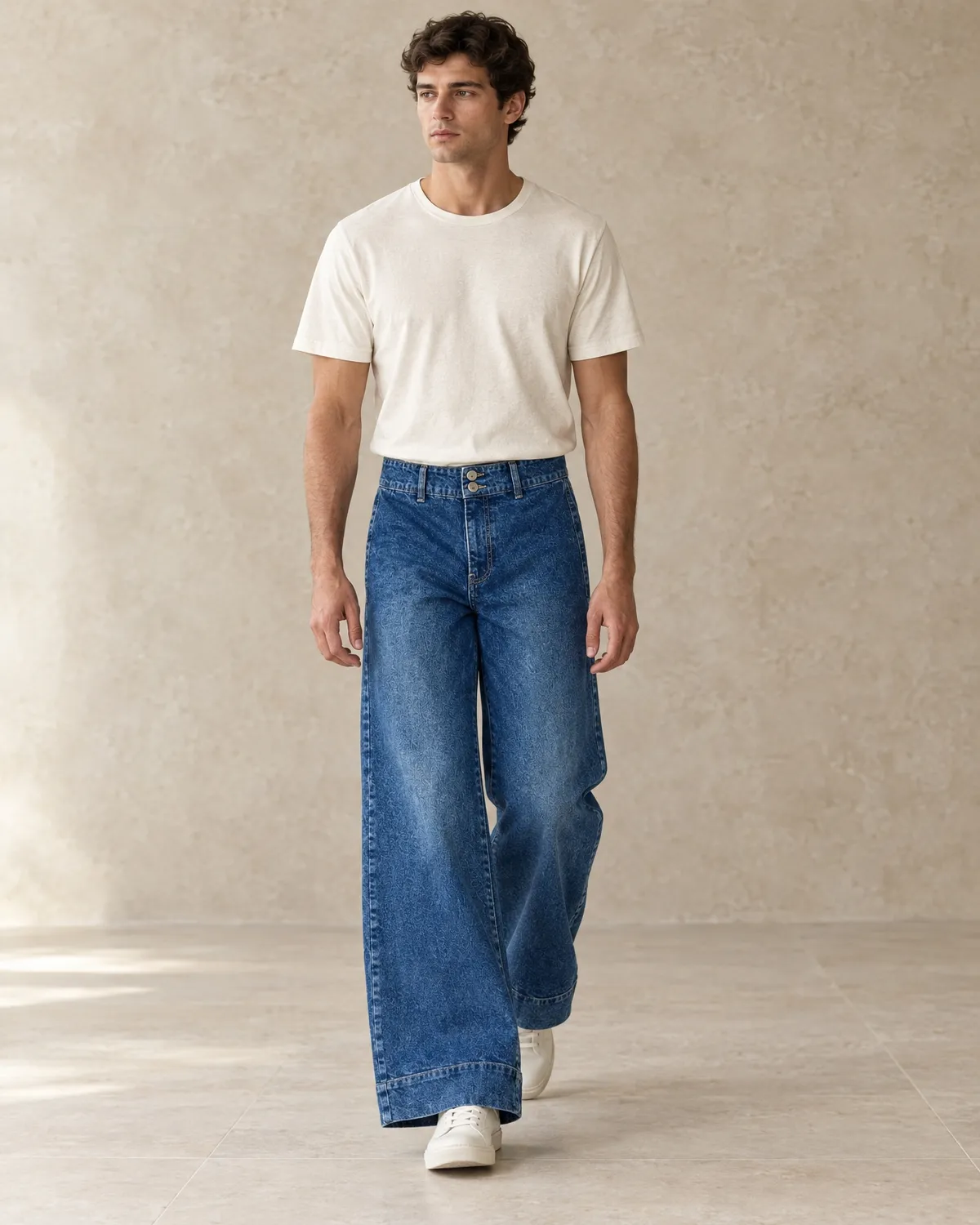
Wide-leg jeans are loose from the hip through to a wide hem, with generous fabric in the leg. They suit mid and high rise and work well in mid-weight rigid denim, which gives the leg structure and a clean drape. They remain popular in women’s and unisex ranges. Browse wide-leg jeans.
Flared jeans
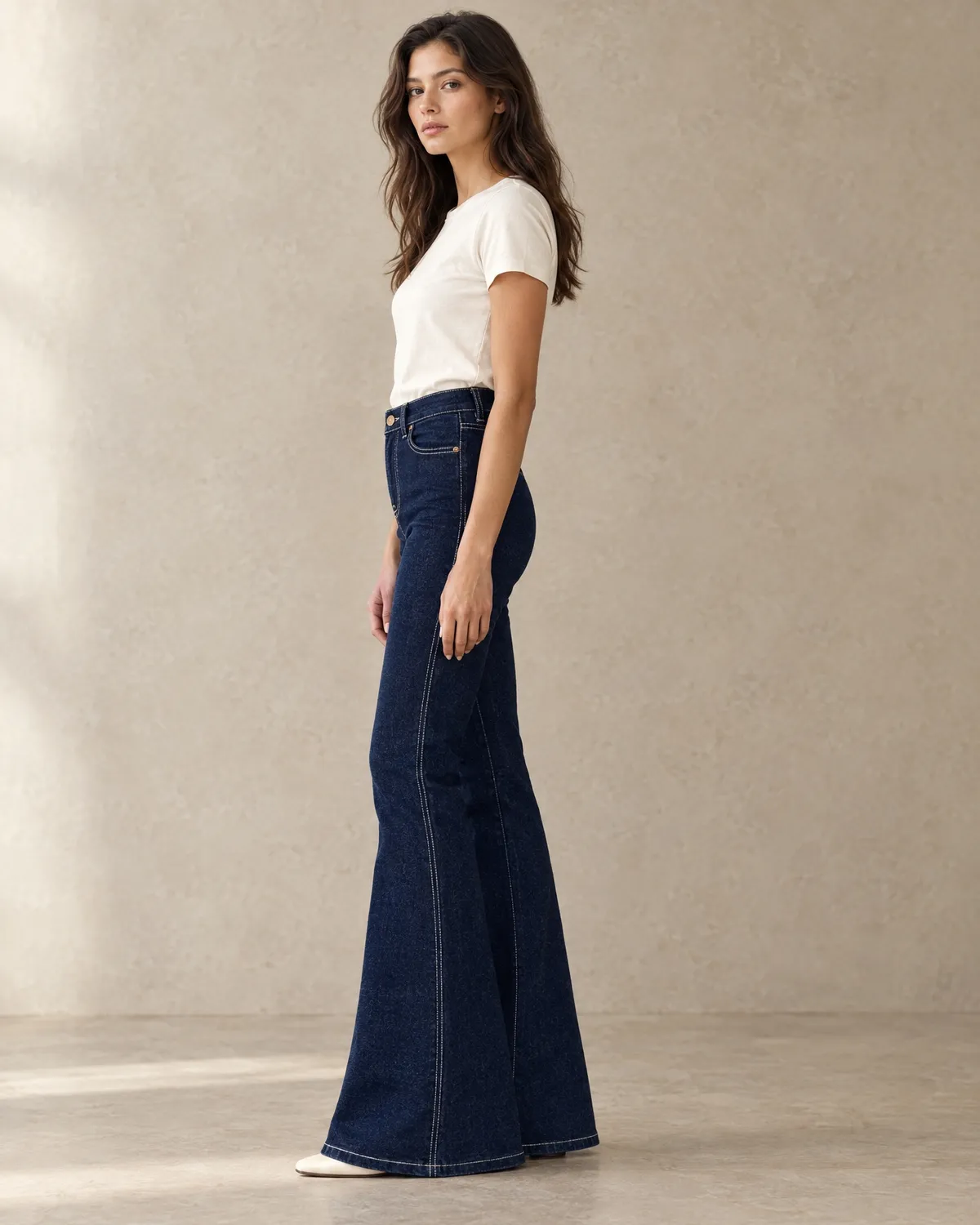
Flared jeans fit closely through the thigh and widen from the knee to the hem. The proportion depends on where the flare begins and how wide the opening is. Fabric with some stretch helps the upper leg fit closely. See flared jeans and our newer stacked flare jeans.
Baggy jeans
Baggy jeans have a loose fit throughout, often with a lower rise and extra length that stacks at the ankle. They suit streetwear ranges and heavier rigid denim. Specify rise and inseam carefully, because the length is part of the look. See baggy jeans.
High-rise jeans
High-rise jeans sit at or above the natural waist and can be made in straight, wide or flared shapes. The rise measurement is critical, and the waistband must sit comfortably. See high-rise jeans.
Ripped and distressed jeans
Ripped and distressed styles add repair, abrasion and tears to any base fit. They are a finishing choice, so you can apply them to straight, baggy or wide shapes. Placement matters, so mark rips on a drawing or reference photo. Browse ripped jeans, distressed jeans and frayed panel jeans.
Matching fit to fabric
Different fits suit different denim.
- **Rigid denim** holds shape and suits wide, baggy and straight cuts.
- **Stretch denim** moves with the body and suits skinny, flared and close fits.
- **Heavier fabric** gives structure; **lighter fabric** drapes.
Our guides on rigid versus stretch denim and denim fabric weight explain how to choose.
Choosing a wash to suit the fit
Wash and fit work together. A dark rinse makes a wide leg look sharp and formal. A light stone wash gives a baggy fit a relaxed feel. Distressing suits relaxed fits particularly well. See denim wash types before you decide.
Building a balanced range
A strong first range usually includes:
- One core cut, such as straight leg, in a classic wash
- One fashion shape, such as wide-leg or flared
- One relaxed style, such as baggy
- One finishing variant, such as ripped or distressed
With a minimum of 50 pieces per style, you can test all four in a single run and learn which your customers choose. Our jeans and trousers page shows what we make.
Get the fit right on the sample
Always approve fit on the body. Check rise, thigh, knee and hem, sit and stand, and wash the sample once to see how it shrinks and fades. Compare the sample against your measurements and use the sample approval checklist so you do not skip steps.
Questions buyers ask about jeans fits
How many fits should a first range have?
Three to five is plenty. One core cut, one fashion shape and one relaxed style give customers a clear choice without scattering your budget.
Do fits run the same across women’s and men’s ranges?
The names are shared but the proportions differ, so give us measurements or a reference pair for each. A wide-leg women’s pattern is not the same as a wide-leg men’s pattern.
Can I change the rise without changing the fit name?
Yes. Rise is a measurement, so you can offer a high-rise and a mid-rise of the same leg shape. Each needs its own sample.
Ready to build your range
Bring a sketch, tech pack or reference pair. We will confirm the spec, develop a paid sample for your approval and show you QC photos and video before shipping to your market. Request a quote to begin.