

A size chart is the backbone of any clothing order. If your measurements are unclear, the factory has to guess, and guesses show up later as returns and unhappy customers. Jeans are especially sensitive, because a small error in the waist, rise or leg opening changes the way the whole garment sits.
This guide explains the key measurement points on jeans, how grading works, how to set tolerances and how to send everything to a manufacturer with a tech pack. It is written for brands that are creating their first size chart.
What is a jeans size chart and why does it matter for production?
A size chart, often called a spec sheet or measurement chart, lists the finished garment measurements for each size in your range. It tells the pattern maker and the production team exactly how big each part of the jeans should be once the garment is made and finished.
Do not confuse it with a customer-facing size guide. A customer guide often shows body measurements and a suggested size. A production size chart shows garment measurements, which are the actual dimensions of the jeans laid flat. You will usually need both, but the factory works from the garment spec.
What are the key measurement points on jeans?
Each brand names points slightly differently, so always add a small diagram or description of how each point is measured. These are the core points for most jeans:
- Waist: measured straight across the top of the waistband when laid flat, usually doubled to give the full circumference.
- Front rise: measured from the crotch seam up to the top of the waistband at the front.
- Back rise: the same measurement at the back, which is usually longer than the front.
- Hip: measured across the fullest part below the waistband, at an agreed distance from the top.
- Thigh: measured across the leg at an agreed distance below the crotch seam.
- Knee: measured across the leg at a set point down from the crotch.
- Leg opening: measured across the hem. This changes the silhouette more than most people expect.
- Inseam: measured along the inner leg seam from the crotch to the hem.
- Outseam: measured along the outer leg from the top of the waistband to the hem.
Add the position of each measurement, for example “thigh measured at a set distance below the crotch.” Without that detail, two people can measure the same jeans and get different numbers.
How do I choose a base size?
The base size, also called the sample size, is the size you develop first. All other sizes are calculated from it. Pick the size that sits near the middle of your range and that your fit model wears comfortably.
Work the fit out on the base size before you grade. If you change the base size later, every other size changes with it, so it is cheaper to correct problems early.
What is grading and how do grading increments work?
Grading means scaling a pattern up and down from the base size to create the full size range. Each measurement point grows or shrinks by a set amount from one size to the next. That set amount is the grading increment.
Increments are not the same for every point. The waist, hip and thigh usually move by a different amount than the rise or the inseam, because bodies do not scale evenly. Many brands also use a larger step in the upper sizes than in the lower ones.
We will not give you a universal set of numbers here, because the right increments depend on your target market, your fit philosophy and the style. A slim fit and a baggy fit grade differently. Ask your pattern maker or your manufacturer to propose increments for your style, then check the results against your fit model and against competitor jeans you admire.
What are tolerances and why do you need them?
No two garments come out identical. Cutting, sewing, washing and finishing all move the final dimensions slightly. A tolerance is the acceptable plus or minus allowance for each measurement point.
Tolerances protect both sides. They tell the quality team when a garment passes and when it needs to be corrected. Without them, every small difference becomes an argument.
Some points need tighter control than others. The waist, rise and inseam are usually more sensitive than a pocket position. Washing also changes the measurements of denim, so tell the factory whether your chart shows measurements before wash or after wash. Many specs show both.
Agree tolerances in writing when you approve the sample. Our quality control process checks bulk garments against the approved sample, and shares photos and video with you before shipping.
How do I use a fit model?
A fit model is a person whose body you use to check how the jeans actually sit. Measurements on paper cannot tell you whether the rise feels right when someone sits down or whether the leg opening looks balanced when they walk.
Good fit sessions follow a simple routine:
- Have the model try the sample in the base size.
- Check the waist, rise, seat and thigh while standing, sitting and moving.
- Take clear photos from the front, side and back.
- Write down notes in measurable terms, for example “raise the back rise” rather than “feels off.”
- Update the chart and request a corrected sample.
How do I send a size chart with a tech pack?
Your size chart sits inside the tech pack, the document that tells the factory how to make the style. A clear tech pack and chart together reduce sampling rounds and avoid misunderstandings.
A strong package usually includes:
- A flat sketch with the front and back views and the construction details.
- The measurement chart with every point, the base size and the grading for all sizes.
- The tolerance for each point and a note about before-wash or after-wash measurements.
- The point-of-measure diagram showing exactly where each measurement is taken.
- Fabric, trim, thread, label and packaging details.
Keep the file in a format the factory can open easily, such as a PDF alongside a spreadsheet, and name the files clearly so versions are not mixed up. For a full walkthrough, see how to prepare a tech pack.
Different fits need different charts
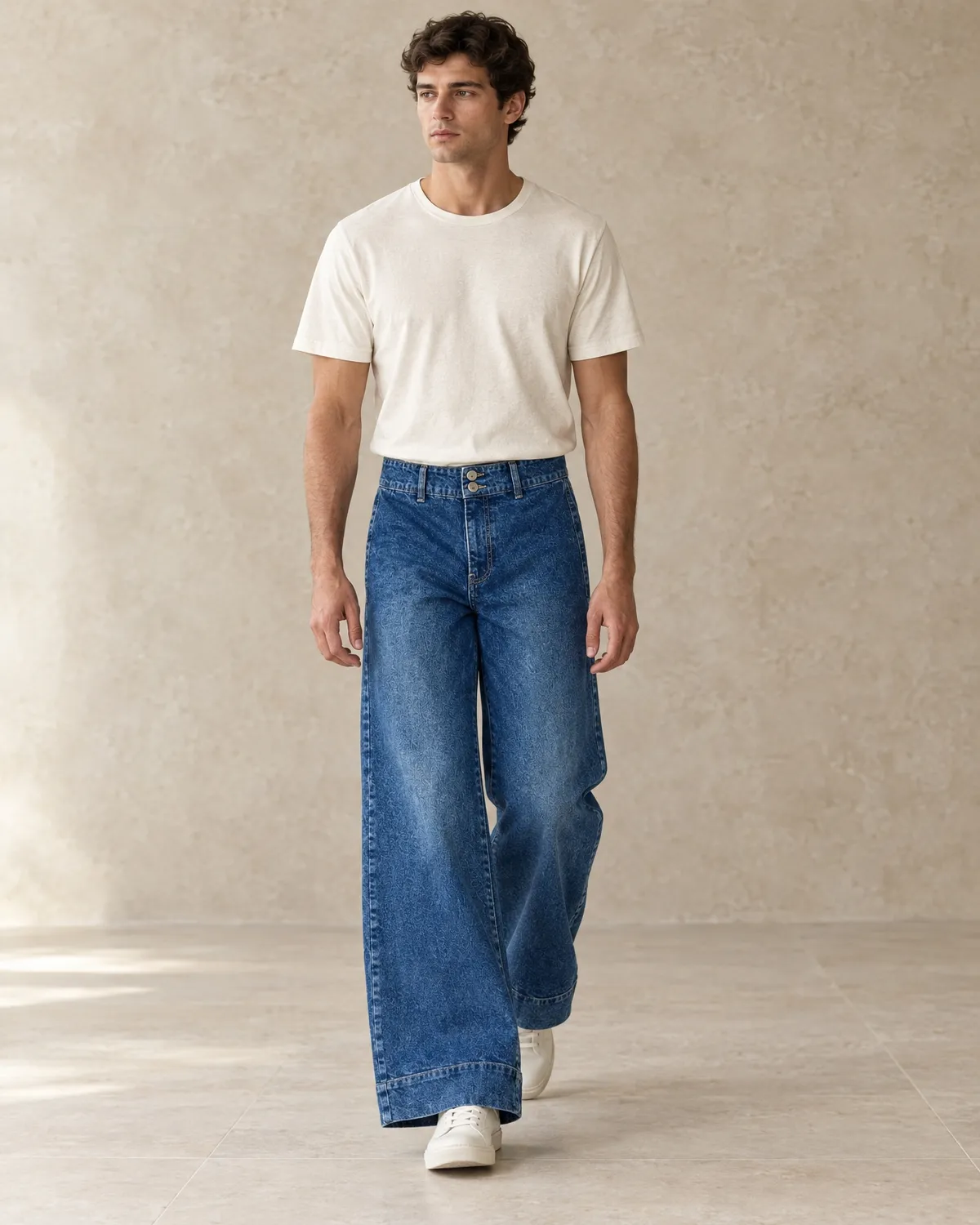
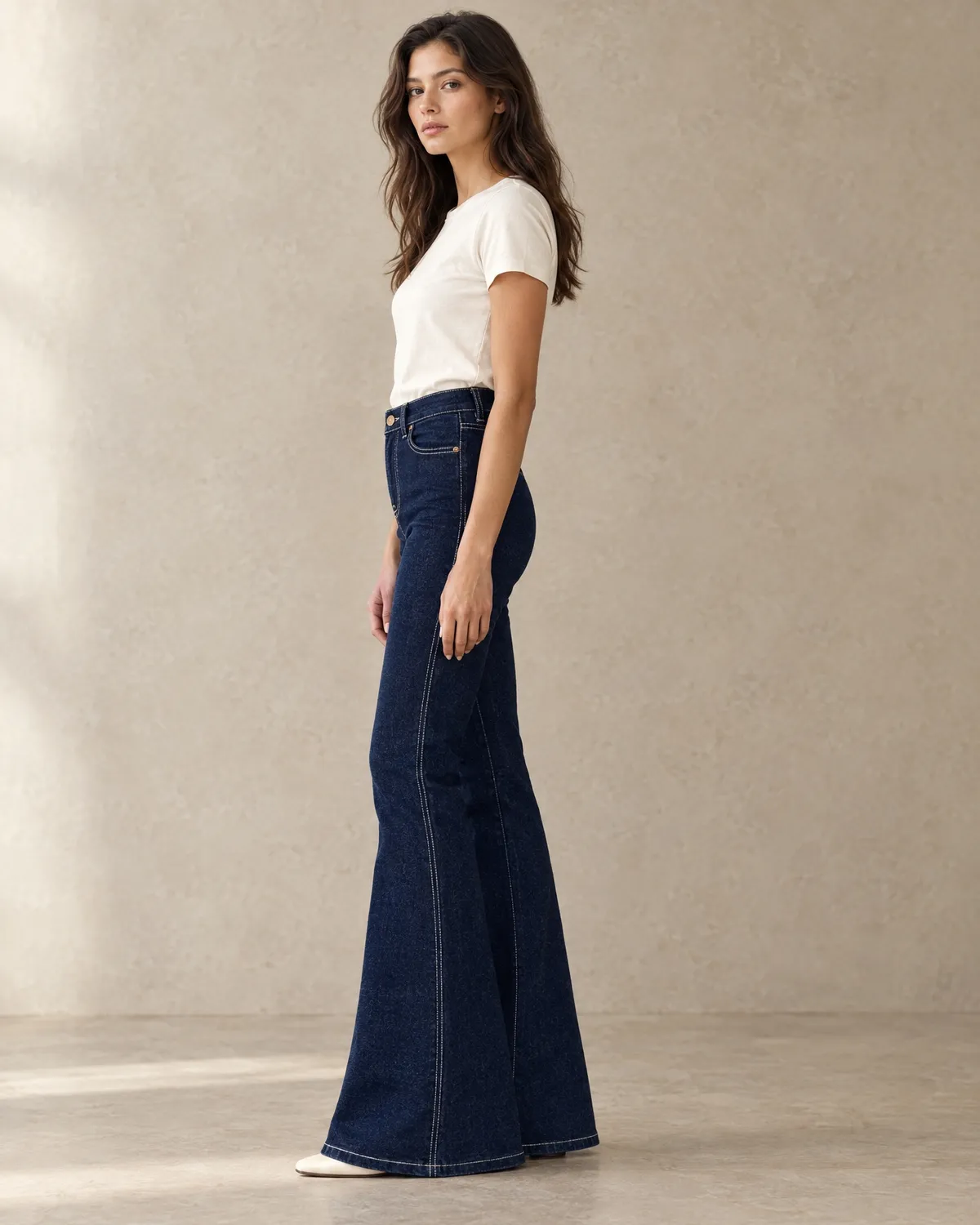
Remember that one chart does not fit every style. A relaxed silhouette will have a very different leg opening, thigh and rise than a slim one. If you plan more than one fit, build a separate chart for each. You can look at examples such as our wide-leg jeans and baggy jeans to see how the proportions change between silhouettes.
Next steps
A good size chart is not complicated. It is a clear list of measurement points, a well-chosen base size, sensible grading, honest tolerances and a fit check on a real person. Build it once, keep it updated and reuse it as the starting point for your next style.
If you want help turning your idea into a production-ready spec, request a quote and share what you have. It is free to ask and there is no obligation.